Garage Floors That Don't Dust or Stain
Epoxy Floor Coatings in Mount Holly for bare concrete slabs in garages, workshops, and outbuildings
Attached garages and outbuildings on older Mount Holly and Belmont properties typically have bare concrete slabs that were poured decades ago with no surface treatment. Over time, these floors dust, absorb oil and fluid stains, and wear unevenly where tires and foot traffic concentrate. An epoxy coating seals the slab completely, creating a hard, non-porous surface that resists staining and stands up to vehicle weight, dropped tools, and chemical exposure.
Epoxy is only as good as the surface under it. Wooten Concrete cleans and profiles the floor so the coating can bond, repairs cracks and loose spots that would telegraph through the coating, and applies the epoxy in layers that cure into a single, bonded system. Once cured, the floor takes traffic without chipping or peeling, and spills wipe up without soaking in.
Arrange an on-site consultation to review floor condition and coating options.
What You Notice Once the Floor Is Finished
The floor is mechanically ground or acid-etched to remove surface contaminants and create a rough profile that the epoxy can grip. Cracks are routed and filled, and any areas where the slab has delaminated are removed and patched. The epoxy is then rolled or squeegeed onto the prepared surface in a base coat, with an optional broadcast of color flakes for texture and slip resistance, followed by a clear topcoat that hardens into a glossy or satin finish.
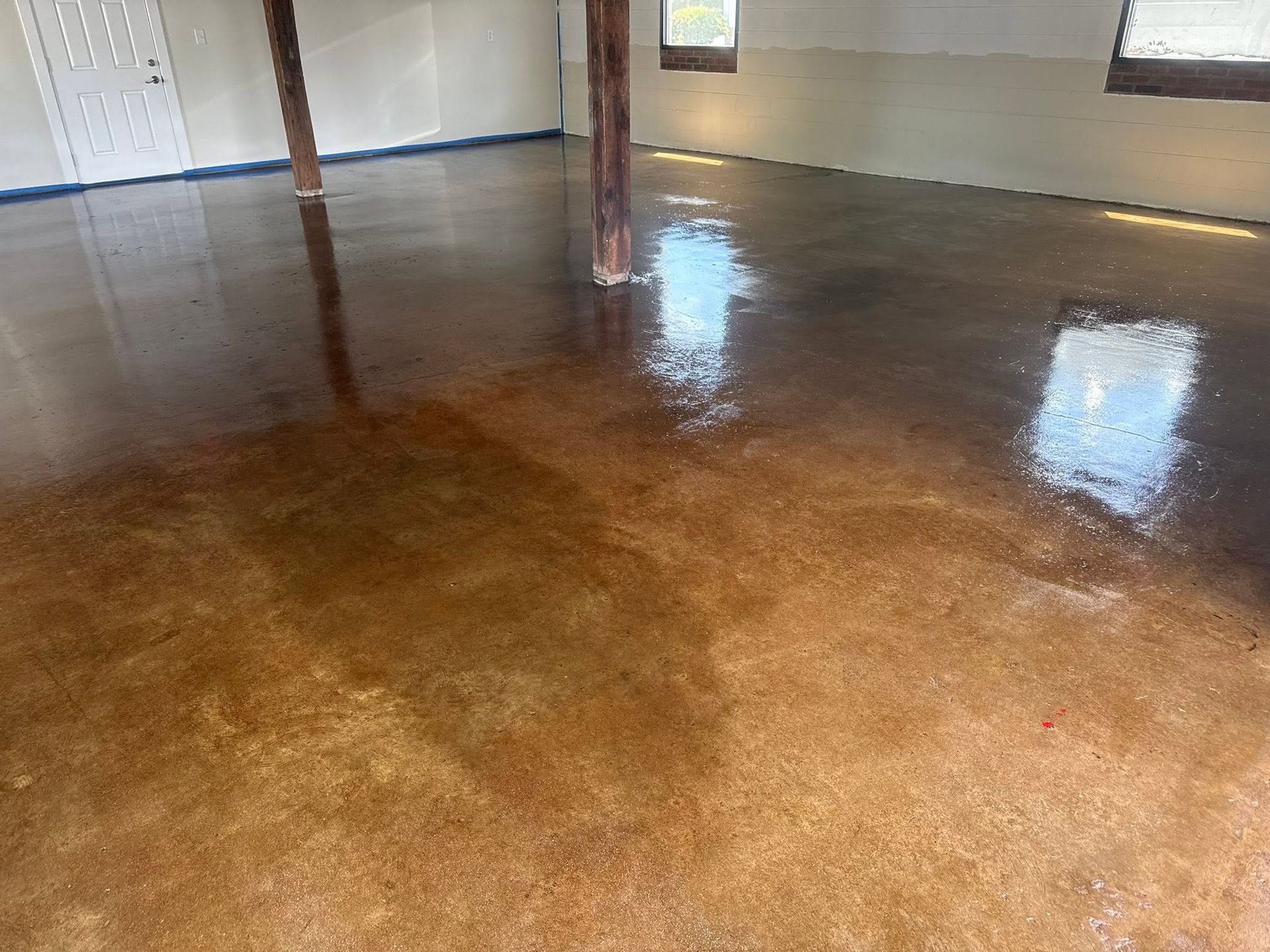
Once the coating cures, the floor no longer produces concrete dust when swept, and oil, antifreeze, and other fluids bead on the surface rather than soaking in. The slab looks uniform and finished, without the patchy staining and worn paths that bare concrete develops. Tire marks wipe off, and the floor stays cleaner with less effort because the sealed surface has nowhere for dirt to lodge.
Hot tires from recent driving can soften some epoxy formulations, and coatings applied over damp concrete or in cold temperatures may not bond correctly. Proper surface prep and cure time are non-negotiable—shortcuts in either stage lead to peeling and failure within months.
Common Questions About This Service
These questions cover the coating process and what affects durability on garage and workshop floors.
How is the floor prepared before epoxy is applied?
The slab is ground with a diamond head or etched with acid to remove surface contaminants and open the pores, then vacuumed and wiped clean so no dust or residue interferes with the bond between the concrete and the epoxy base coat.
What happens if the concrete underneath is damp?
Epoxy will not bond to damp concrete, and moisture trapped under the coating will cause it to bubble and peel, so a moisture test is performed before coating, and any moisture issues are addressed before the epoxy is applied.
Why do some floors have colored flakes mixed into the coating?
Flakes are broadcast into the wet base coat to add texture, improve slip resistance, and hide minor imperfections in the slab, and they create a speckled appearance that breaks up the solid color and makes dirt less visible between cleanings.
How long before the floor can handle vehicle traffic?
The epoxy needs at least 24 hours to cure before foot traffic and 72 hours before parking a vehicle, and full chemical resistance develops over the following week as the coating finishes hardening.
What changes after the coating is applied?
The floor stops dusting, spills no longer soak in and stain the concrete, and the surface reflects light, making the garage or workshop noticeably brighter even with the same lighting.
Wooten Concrete also applies epoxy floor coatings in Belmont, Gastonia, Charlotte, Cramerton and Stanley. Call Wooten Concrete at (704) 472-7712 to schedule a floor evaluation and discuss coating options for your garage or workshop.