
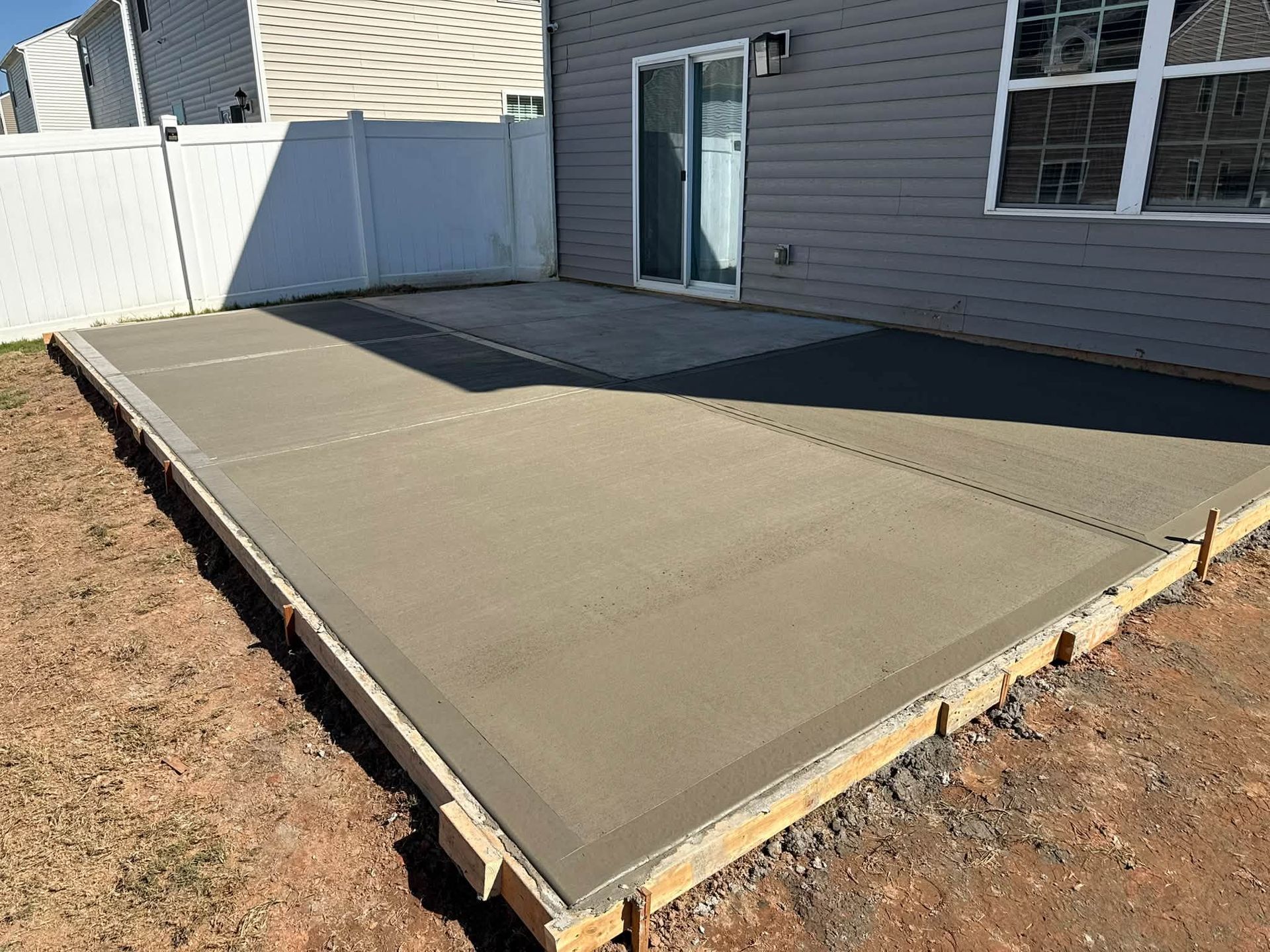
Flatwork Built to Outlast the Foundation
Concrete Installation in Mount Holly for homes with settled, cracked, or separated slabs
Most of the older homes around Mount Holly came with original concrete walks and drives that have settled, cracked, or pulled away from the house over decades of use. Wooten Concrete handles concrete installation by removing the failed slab, correcting the base beneath it, and pouring new flatwork that sits level and drains properly. The person who measures the job and writes the estimate is the same person who forms and finishes the concrete, so there is no handoff to a different crew and no gap between what was discussed and what gets built.
A new pour usually means tearing out the old slab first, hauling away the broken concrete, and addressing whatever caused the original failure—whether that is loose fill under a driveway apron or soil that was never compacted when the walk was laid. Forms are set to the planned dimensions, the base is leveled and compacted, and the concrete is placed to the specified thickness with control joints cut or tooled in to manage cracking as the slab cures.
Schedule a site visit to review the existing slab and discuss removal, grading, and finish options.
What Proper Installation Requires
Concrete installation starts with subgrade preparation—removing the old slab, excavating soft or uneven material, and bringing in compacted fill or gravel where the base needs support. Forms are built to the planned slope so water moves away from the house or garage, and reinforcing is placed before the pour to reduce the chance of wide cracks forming later.
Once the slab is poured, you will notice a surface that sits flush with entry thresholds, drains without pooling, and no longer shows the offset or tilt that marked the old concrete. The finish can be broomed for traction or troweled smooth depending on the application, and control joints are cut at regular intervals so any cracking that does occur follows those lines rather than wandering across the slab.
Residential flatwork involves coordinating access for concrete trucks, protecting landscaping near the pour area, and timing the finish work so the surface can be tooled without tearing. Jobs are scheduled directly with the owner, so the same person who priced the work handles the grading, forming, and finishing from start to cleanup.
Questions Before Starting Your Project
These answers cover the work itself and what changes once the installation is complete.
What happens to the old concrete before the new slab is poured?
The existing slab is broken up, removed, and hauled off, then the subgrade is inspected for soft spots or voids that need to be filled and compacted before forming begins.
How is the base prepared for a new pour?
Loose material is excavated, the subgrade is graded to the planned elevation and slope, and a compacted gravel base is added where the existing soil will not support the load without settling.
Why are control joints placed in the slab?
Control joints create a planned weak line where the concrete can crack as it shrinks during curing, so the cracking stays straight and narrow rather than wandering unpredictably across the surface.
What finish options work best for driveways and walkways in Mount Holly?
A broom finish adds traction for wet conditions and is standard for most walks and drives, while a smoother trowel finish is used where the slab needs to meet a threshold or garage floor at the same level.
How long before the new concrete can support vehicle weight?
The slab needs at least seven days of curing before regular traffic, though light foot traffic is safe within 24 to 48 hours depending on temperature and humidity during the pour.
Wooten Concrete has completed residential flatwork across Mount Holly and Belmont since 1995, with most projects coming from referrals and repeat customers who call back for additional slabs. Wooten Concrete also installs concrete in Belmont, Gastonia, Charlotte, Cramerton, and Stanley. Contact Wooten Concrete at (704) 472-7712 to arrange an estimate based on your existing conditions and project scope.