
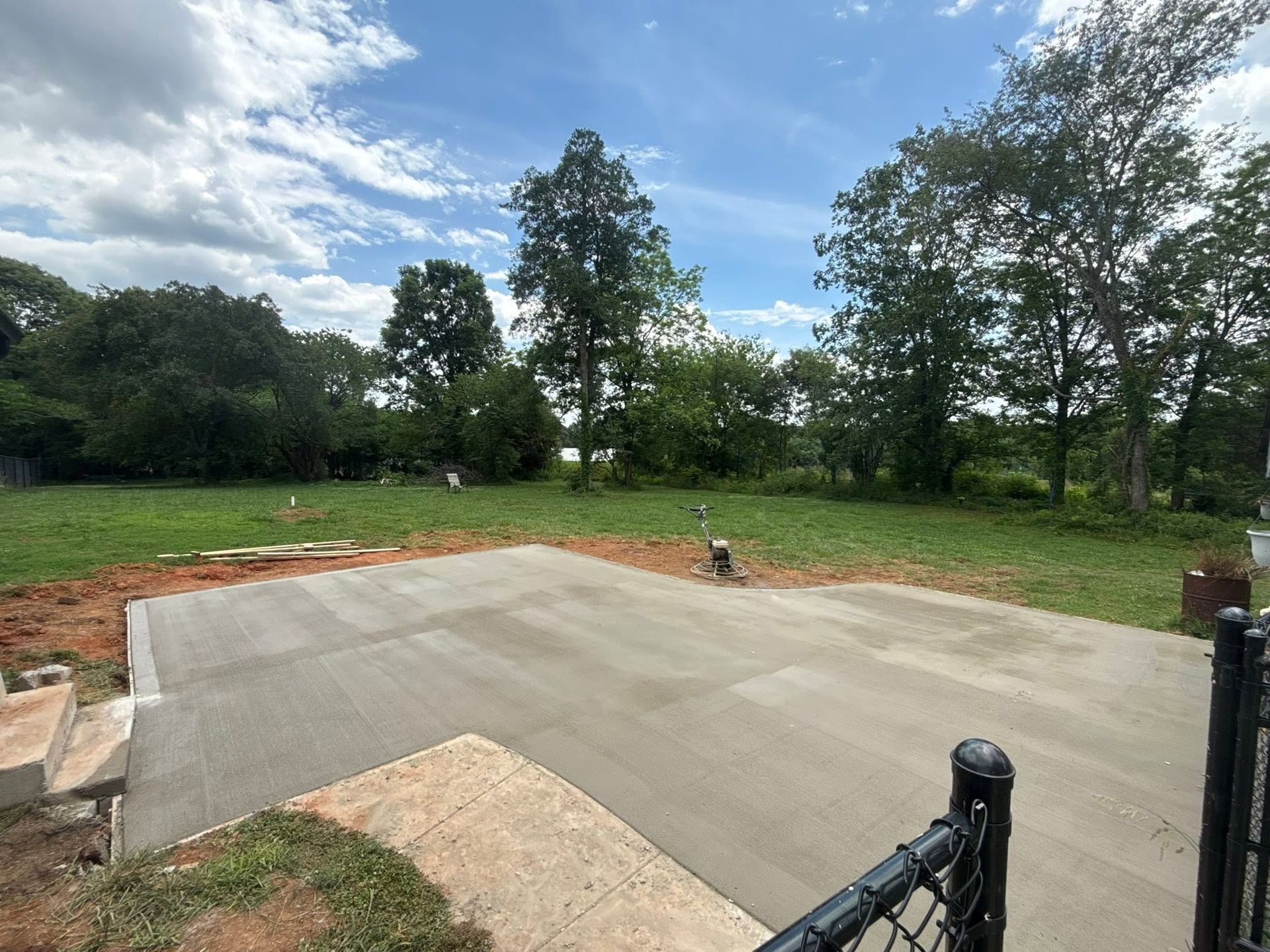
Outdoor Surfaces Built to Last Decades
Concrete Patio Installation in Mount Holly for replacing old decks, worn grass areas, or settled slabs
Backyard patios on established lots in Mount Holly, Belmont, and Gastonia are usually poured to replace an old wood deck, a worn grass area, or a patio that has cracked and settled over time. Wood decks built in the 1980s and 1990s have reached the end of their structural life, with rotted joists and loose boards that make the surface unsafe, while older concrete slabs often have settlement cracks and uneven sections where water pools. A new concrete patio provides a level, durable surface that drains properly and requires no seasonal maintenance or board replacement.
Wooten Concrete handles the full installation sequence, with a turnkey price that covers grading, forming, reinforcing, pouring, and finishing, so the customer knows what is included before booking. The slab is built to drain away from the house, with a slope that prevents standing water and directs runoff toward the yard or a drainage path. The finished surface can be left smooth, broom-textured for slip resistance, or stamped with a pattern depending on the customer's preference and budget.
Schedule a property evaluation to identify specific grading and drainage concerns for your backyard.
The Difference Between a Quick Pour and a Lasting Patio
The installation begins with grading the patio footprint to establish the proper slope, then compacting the base and placing forms around the perimeter. Rebar is installed in a grid pattern across the slab to control cracking, and the concrete is poured, screeded to the correct slope, and finished with the selected texture. The grading and reinforcement determine whether the patio stays level and crack-free for decades or develops problems within the first few years, so those steps are completed before the concrete arrives on site.
Once the concrete cures, you'll have a flat, stable patio that drains toward the yard without holding water near the house, and the surface will remain level without the cracking or settling that happens when the base is not properly graded and compacted. The edges are clean and formed to the final dimensions, and the finish provides traction without being rough underfoot. That stability and drainage are what prevent the common problems seen on older patios, where water pools against the foundation or the slab cracks along the center.
Turnkey patio installation includes grading, forming, reinforcing, pouring, and finishing; it does not include removal of old decking or concrete, landscape changes, or drainage system installation unless those are confirmed in the scope before work begins. The slab thickness and reinforcement pattern depend on the soil condition and the size of the patio, so larger areas or softer ground require a thicker pour and tighter rebar spacing.
Questions Before Starting Your Project
Patio installations involve decisions about size, finish, and site conditions, so the following questions address the most common concerns for property owners in Mount Holly planning a backyard pour.
What should be confirmed before booking a patio installation?
The scope should include grading, forming, reinforcement, concrete placement, and finishing, with any additional work such as old slab removal, drainage installation, or landscape changes clearly listed so there are no surprises during the project.
How is the patio graded to prevent water from pooling?
The surface is sloped away from the house at a rate that allows water to drain toward the yard or a drainage path without creating a noticeable tilt, typically around a quarter inch per foot of patio depth.
What determines the thickness of a backyard patio slab?
The soil condition, patio size, and intended use determine the thickness, with most residential patios poured at four inches thick and reinforced with rebar to control cracking and support furniture, grills, and foot traffic without settling.
How long does a concrete patio need to cure before it can be used?
Light foot traffic is usually safe after 24 hours, but furniture and heavy items should wait at least seven days to allow the concrete to reach full strength and avoid cracking or surface damage.
What can you check to know the patio is draining correctly?
After a rain, water should flow toward the yard or drainage path without pooling on the slab or running back toward the house, and the surface should dry evenly without leaving standing water in low spots.
Wooten Concrete also installs concrete patios in Belmont, Gastonia, Charlotte, Cramerton, and Stanley. With over 30 years in business and experience handling turnkey jobs from grading through final finishing, the same contractor who provides your estimate will pour your patio.