Walks That Meet the House Cleanly
Concrete Sidewalk Installation in Mount Holly for properties with heaved, cracked, or uneven walkways
Established lots in Mount Holly and Belmont often have older walks that have heaved or cracked at the joints, leaving uneven surfaces that collect water and create tripping hazards at entry steps. Replacing a run of walk usually means matching the existing width and edge height to the house entry, so the new concrete sits flush with thresholds and porch slabs without a step or gap. Wooten Concrete removes the old walk, grades and compacts the path, and pours a new sidewalk with the slope and jointing needed to prevent the same failures from recurring.
The old walk is broken out and hauled away, then the path is excavated to remove roots, soft fill, or settled soil that caused the original slab to tilt. Forms are set to the planned width and slope so water drains away from the house, and expansion joints are placed where the walk meets steps, driveways, or other fixed surfaces to allow for seasonal movement without cracking the slab.
Request a site evaluation to measure the existing walk and review grading, width, and finish details.
How Sidewalk Installation Addresses Movement and Drainage
Sidewalk installation begins with clearing the path and excavating to a consistent depth, then compacting the base to prevent settling under foot traffic and freeze-thaw cycles. Forms are built to the planned width—typically 36 to 48 inches for a front walk—and pitched slightly away from the house so runoff moves toward the yard or street rather than pooling against the foundation.
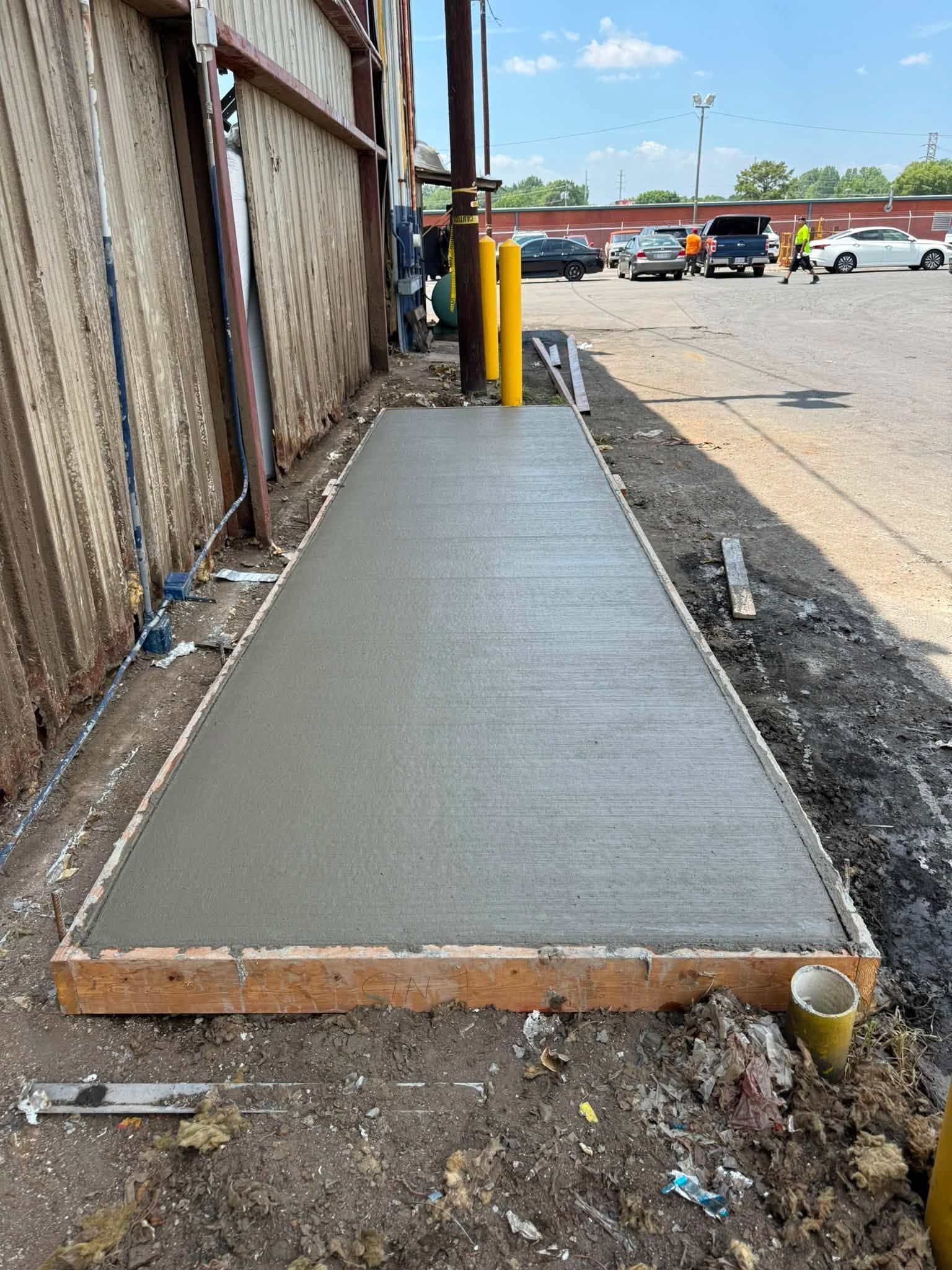
After the pour, you will see a smooth, level walking surface that no longer tilts toward the house or shows the cracks and offsets that marked the old concrete. The finish can be broomed for traction in wet weather or troweled to a smoother texture where the walk meets a porch or entry slab, and control joints are tooled in at four- to six-foot intervals to manage shrinkage cracking as the concrete cures.
The work includes setting expansion material where the walk meets stairs or adjoining slabs, so the joint can compress and expand without transferring stress into the new concrete. Forms come off once the slab has cured enough to hold its edge, usually within 24 hours, and the edges are backfilled and tamped to prevent voids from forming along the sides of the walk.
Answers About How the Work Is Done
These questions address the installation process and what you will notice once the walk is finished.
What happens to the old sidewalk before the new one is poured?
The old walk is removed in sections, hauled off, and the subgrade is inspected for soft spots, roots, or voids that need to be corrected before the base is compacted and formed.
How is the new walk sloped to prevent water from pooling?
Forms are set with a slight pitch away from the house—usually a quarter inch per foot—so runoff drains toward the lawn or street rather than sitting against the foundation or entry step.
Why are expansion joints placed where the walk meets steps or driveways?
Expansion joints allow the concrete to move slightly as temperatures change without cracking, because the walk and the fixed surface it meets expand and contract at different rates.
What finish is used for residential sidewalks in Mount Holly?
A broom finish is standard for most walks because it adds traction in wet conditions, though a troweled finish is used where the walk meets a porch or threshold to create a smooth transition.
How soon can you walk on the new sidewalk?
Light foot traffic is safe within 24 to 48 hours, though the concrete continues to cure and gain strength over the following week.
Wooten Concrete has installed residential sidewalks across Mount Holly and Gastonia for more than 30 years, with much of the work coming from repeat customers who call back for additional flatwork. Wooten Concrete also installs concrete sidewalks in Belmont, Gastonia, Charlotte, Cramerton, and Stanley. Call (704) 472-7712 to schedule a measurement and discuss width, slope, and finish options for your property.