Pads That Keep Equipment Level
Concrete Pads & Slabs in Mount Holly for outdoor units, sheds, generators, and equipment placement
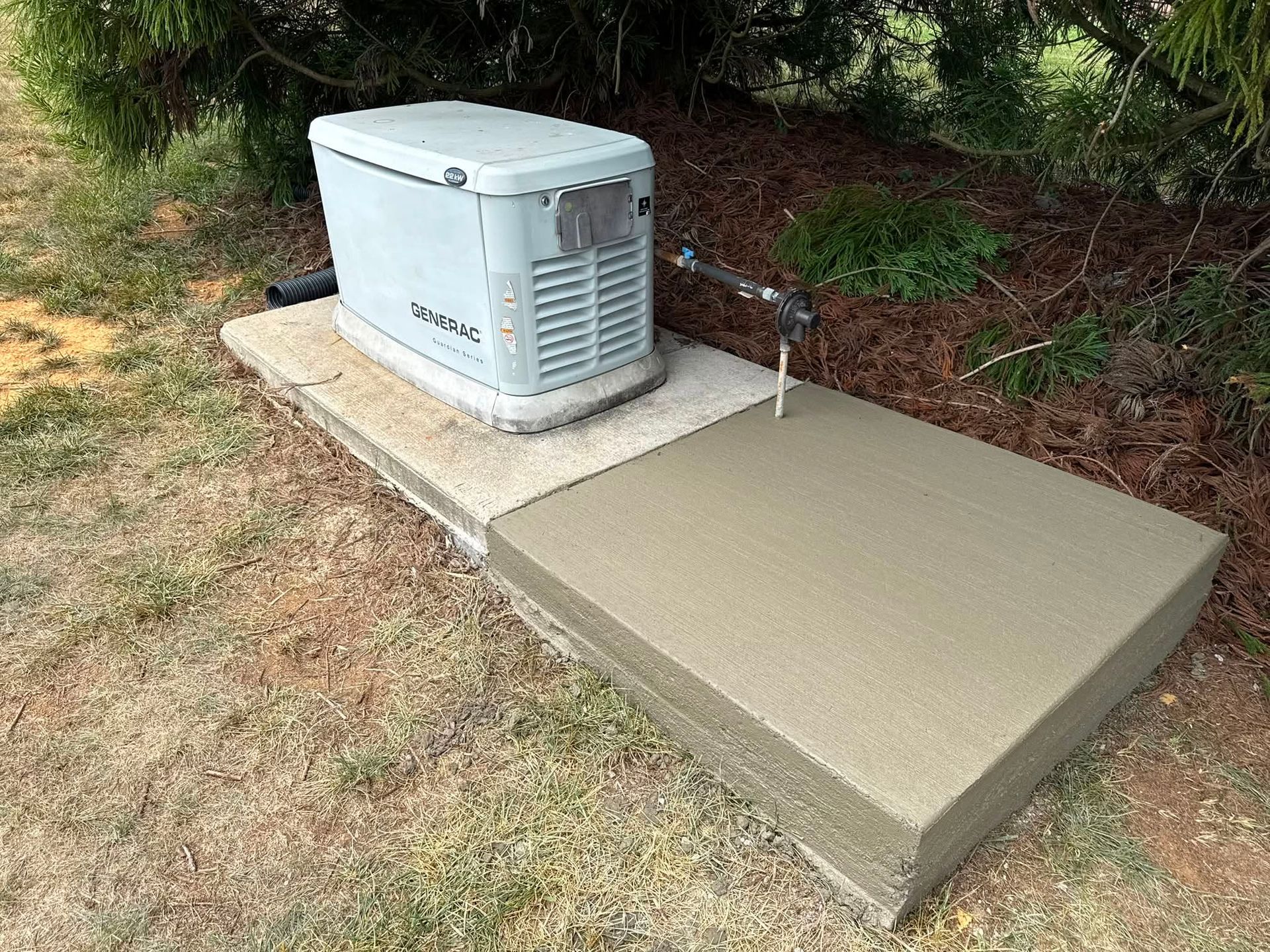
Homes in the Mount Holly area often need a level pad for an outdoor unit, a shed, or a generator, and a properly built pad keeps that equipment from settling into soft ground over time. Without a stable base, air conditioning condensers tilt as the soil beneath them compacts, generators sink and become unlevel, and shed floors crack or separate from the perimeter blocks they were set on. Wooten Concrete clears the site, grades and compacts the base to the finish elevation, and pours a slab that sits level and drains away from the equipment, usually completing the work in a single visit.
The area is excavated to remove topsoil, roots, or loose fill, then the base is compacted and leveled to the planned height so the finished pad sits just above grade and sheds water. Forms are set to the required dimensions—typically sized a few inches larger than the equipment footprint—and the concrete is poured, finished, and jointed if the pad is large enough to need control cuts.
Schedule a consultation to review the site, confirm pad dimensions, and discuss placement and grading details.
Why Proper Pad Installation Works for Long-Term Stability
Pad installation begins with clearing vegetation and excavating to a depth that allows for a compacted base layer, usually four to six inches depending on the size and weight of the equipment. The subgrade is leveled and tamped, forms are built to the planned dimensions, and the slab is poured to a thickness that will support the load without cracking or settling—typically four inches for most residential equipment pads.
After the pour, you will notice a flat, level surface that no longer shifts or tilts as the ground freezes and thaws, and equipment that was previously sinking into soft soil now sits stable on a slab that drains properly. The pad is finished with a trowel or light broom depending on the application, and edges are formed cleanly so the slab does not creep beyond the planned footprint or interfere with adjacent plantings or drainage paths.
Small pads for air conditioning units or generators are usually poured without reinforcing, while larger slabs for sheds or storage buildings include wire mesh to control cracking as the concrete cures. The site is backfilled and graded once the forms are removed so runoff moves away from the pad rather than pooling along the edges.
What Property Owners Ask About the Work
These answers cover the installation process and what happens once the pad is in place.
What size pad is needed for an outdoor air conditioning unit?
Most residential condensers sit on a pad that is a few inches larger than the unit footprint on all sides, typically 36 by 36 inches or 42 by 42 inches depending on the unit size.
How is the base prepared before the slab is poured?
The area is cleared of grass and topsoil, excavated to depth, and compacted so the finished pad sits just above grade and does not sink as the soil beneath it settles over time.
Why does a generator need a level pad instead of sitting on the ground?
Generators vibrate during operation, and a level concrete pad prevents the unit from sinking unevenly into soft soil, which can stress the mounting frame and cause the unit to tilt or become unlevel.
What finish is used for equipment pads in Mount Holly and Dallas?
Most pads are troweled smooth for a clean finish, though a light broom texture can be added where traction is needed for access or maintenance.
How soon can equipment be set on the new pad?
Light equipment can be placed within 24 to 48 hours, but heavier units should wait until the concrete has cured for at least three to five days to avoid surface damage or cracking.
Wooten Concrete has poured residential pads and slabs across the area for more than 30 years, with most projects coming from referrals and repeat customers who call back for additional pads and slabs. Wooten Concrete also pours concrete pads and slabs in Belmont, Gastonia, Charlotte, Cramerton, and Stanley. Call (704) 472-7712 to arrange a site visit and confirm dimensions, placement, and grading requirements for your equipment or structure.