Building Pads That Won't Settle Later
Concrete Grading & Site Preparation in Mount Holly for uneven back lots and pasture ground where slabs or buildings will be built
Properties across the Mount Holly and Lincolnton area often include back lots or pasture ground where a slab or building pad has to be cut in and compacted before anything can be poured. Wooten Concrete handles the full site preparation sequence, grading and compacting each stage before moving to the next so the pour sits on a stable base. That staging prevents the settlement and cracking that happens when fill dirt or uneven ground is leveled but not properly prepared beneath the concrete.
Site preparation determines whether the finished slab stays level or develops low spots and cracks within the first year. Each layer is graded to the final elevation, then compacted with mechanical equipment before the next stage begins, building a base that supports the weight of the concrete and anything placed on top of it. Properties with pasture ground or sloped back lots require more grading to establish a level pad, and the soil structure determines how many lifts are needed to reach stable compaction.
Schedule a site evaluation to review grading requirements for your specific lot conditions.
What Proper Site Preparation Requires
The grading sequence begins with clearing the footprint and excavating to the required depth, then placing fill material in controlled lifts that are compacted individually. Each lift is tested for firmness before the next layer goes down, so the entire base reaches uniform density across the pad. Wooten Concrete runs turnkey jobs from grading through final pour on the same project, which means the contractor who prepares the site also pours the slab and understands how the two stages depend on each other.
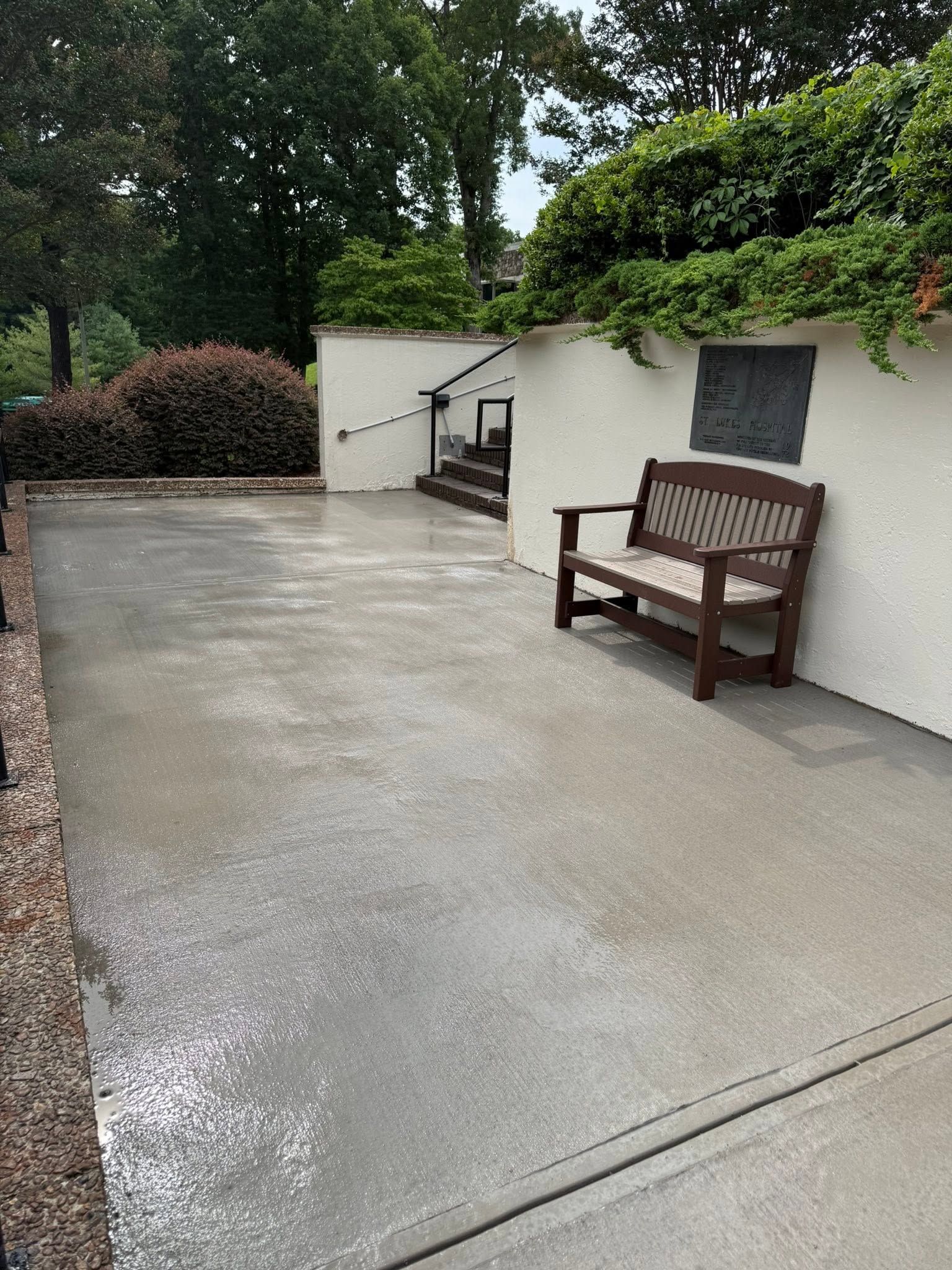
Once grading and compaction are complete, you'll see a level pad with no soft spots, standing water, or loose material, and the surface will feel solid underfoot rather than spongy or shifting. The edges are formed to the final dimensions, and the base is ready to accept reinforcement and concrete without further settling. That stability is what prevents the slab from cracking along the center or sinking at the corners after the first wet season.
Site preparation includes excavation, grading, fill placement, and compaction; it does not include utility trenching or drainage work unless specified in the scope. The depth and number of lifts depend on the existing soil condition and the final use of the slab, so a building pad typically requires more preparation than a simple walkway.
Questions Before Starting Your Project
Site preparation work varies depending on the existing slope, soil type, and what the finished slab will support, so the following questions cover the most common concerns for property owners in Mount Holly planning concrete work on uneven or pasture ground.
What happens if the ground is not compacted before pouring concrete?
The slab will settle unevenly as the soil compresses under the weight, creating low spots, cracks, and sometimes complete failure of the concrete within the first year, especially where fill dirt was placed without mechanical compaction.
How is the grading done on a sloped back lot?
The high side is excavated and the low side is built up with fill material placed in layers, each compacted with a plate compactor or roller before the next lift goes down, so the finished pad sits level and stable across the entire footprint.
What can you check to know the base is ready for concrete?
The surface should be firm and level with no soft spots when you walk across it, standing water should drain to the edges rather than pooling in low areas, and the pad should match the final elevation and dimensions marked on the forms.
Why does pasture ground require more preparation than a typical lot?
Pasture soil is often loose, uncompacted, and has organic material mixed in, so it has to be excavated deeper and replaced with graded fill that is compacted in stages to reach the density needed to support a concrete slab.
What is included in a turnkey grading and pour job?
The scope covers site clearing, excavation, grading, fill placement, compaction, forming, reinforcement, concrete placement, and finishing, with each stage handled by the same contractor so there is no handoff between separate crews.
Wooten Concrete also handles concrete grading and site preparation in Belmont, Gastonia, Charlotte, Cramerton, and Stanley. With over 30 years in business and experience running turnkey jobs from grading through final finishing, the same contractor who prepares your site will pour the slab.